
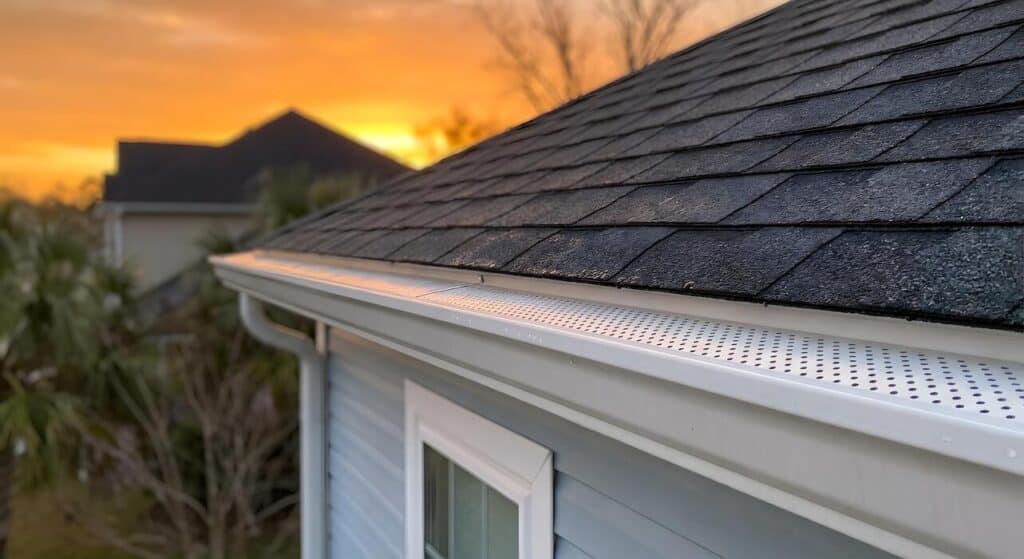
Quick Answer: “Yes, drip edge can often be installed after shingles are already on, but the lower shingle edges may need to be lifted carefully so the flashing can be positioned correctly. Retrofitting works best when shingles remain flexible and undamaged. Brittle shingles, rotted fascia, or limited roof-edge access may require a different approach.”
Discovering that your roof is missing a drip edge does not automatically mean you need a new roof. In many cases, a professional can add this metal flashing to an existing asphalt-shingle roof without removing the entire roofing system.
The condition of the roof edge matters. Shingles that are brittle, cracked, tightly bonded, or poorly installed can make retrofitting more difficult. The installer must also examine the underlayment, fascia boards, gutter position, and any existing signs of water damage.
Professional drip edge installation starts with an inspection of these connected parts so the flashing directs water correctly rather than creating another hidden drainage problem.
Can Drip Edge Be Added Without Replacing the Roof?
Yes, drip edge can often be added without replacing the roof. The installer carefully accesses the lower shingle edge, positions the flashing along the roof perimeter, and secures it without unnecessarily disturbing the existing roof covering.
The work is more complicated than installing a drip edge during a roof replacement. On a new roof, the contractor has open access to the roof deck and underlayment. On an existing roof, those materials are already covered, leaving less room to position and fasten the metal correctly.
A successful retrofit depends on:
- The age and condition of the shingles
- The amount of space beneath the shingle edge
- The existing underlayment placement
- The condition of the fascia and roof decking
- The position of the gutters
- The shape and accessibility of the roof edge
How Drip Edge Is Added to an Existing Shingle Roof
Retrofitting usually involves lifting the edge of the shingles enough to slide the metal flashing into its proper position. The exact method depends on whether the work is being completed along an eave or a rake.
Installation Along the Eaves
The eaves are the lower, horizontal edges of the roof where gutters are normally installed. At this location, the drip edge must guide water off the roof and into the gutter while protecting the roof decking and fascia.
The installer may need to:
- Carefully separate the lower shingle edge
- Inspect the exposed roof edge for moisture damage
- Position the drip edge beneath the appropriate roofing layers
- Fasten the flashing without cracking the shingles
- Confirm that runoff will enter the gutter correctly
- Correct nearby gaps when needed
The gutter position also matters. A gutter mounted too high may block access, while one mounted too low may fail to catch water after the flashing is installed.
Installation Along the Rake Edges
Rakes are the sloped sides of a gable roof. Water behaves differently there because there is usually no gutter directly beneath the edge.
The drip edge protects exposed decking and helps direct water away from trim and fascia. The installer must overlap connected sections correctly and integrate them with the existing roofing layers.
This difference between eaves and rakes is one reason a drip edge retrofit should be planned around the specific roof layout rather than handled with one identical method around the entire house.
When Retrofitting Drip Edge Makes Sense
Retrofitting is usually practical when the existing shingles can be lifted without cracking, and the roof-edge materials remain structurally sound.
Good candidates often have:
- Asphalt shingles that remain flexible
- An accessible roof edge
- Fascia boards without widespread rot
- No major roof-deck deterioration
- Gutters that can be adjusted if necessary
- Several years of useful roof life remaining
- A clear water problem near the roof edge
A retrofit may be especially worthwhile when the missing drip edge is already causing stains, peeling paint, or moisture behind the gutter. Correcting the water path early can reduce continued exposure at the fascia and eaves.
When Should Installation Wait Until Roof Replacement?
Waiting may be safer when installing the flashing would require excessive movement of fragile shingles. Older shingles can crack, split, or lose granules when disturbed.
A contractor may recommend waiting when:
- The shingles are brittle, curled, or near the end of their life
- The roof will need replacement soon
- The lower shingle course cannot be lifted safely
- Roof decking or fascia damage requires broader repair
- Multiple roofing layers block proper placement
- The existing roof edge prevents reliable installation
Waiting should not mean ignoring active leaks or water damage. Temporary corrections may still be needed to control runoff until the roof is replaced.
Retrofitting Now Versus Waiting for a New Roof
The better option depends on the roof’s condition and how much damage the missing drip edge is causing.
| Option | Best When | Main Advantage | Main Concern |
| Retrofit Drip Edge Now | Shingles are flexible, and the roof has a useful life remaining | Corrects the water path without replacing the full roof | Existing shingles must be lifted carefully |
| Install During Roof Replacement | Shingles are old, brittle, or already failing | Provides open access to the deck and underlayment | Water problems may continue while you wait |
| Repair Connected Damage First | Fascia or roof decking is soft or rotted | Creates a sound surface before flashing is installed | Requires additional work before installation |
| Adjust Gutters With the Retrofit | Gutters sit too low, too far away, or interfere with installation | Helps runoff enter the gutter correctly | Fascia and gutter attachment must be inspected |
A professional inspection should determine whether the roof can tolerate a retrofit and whether correcting the drip edge alone will solve the problem.
How Can You Tell Whether Your Home Is Missing Drip Edge?
Drip edge can be difficult to identify from the ground. It normally appears as a narrow strip of metal along the roof perimeter, extending beneath the shingles and over the roof edge.
Possible warning signs include:
- Water dripping between the gutter and fascia
- Dark stains beneath the roof edge
- Peeling or bubbling fascia paint
- Soft or deteriorating wood behind the gutter
- Water overshooting or bypassing the gutter
- Moisture marks on soffits
- Roof decking is visible beneath the shingle edge
- No metal flashing is visible along accessible roof edges
These symptoms do not always prove that the drip edge is missing. Incorrect gutter placement, damaged flashing, roof leaks, and rotted fascia can create similar signs.
For a broader explanation of the flashing and its role along the roofline, read What a Drip Edge Is?
Gutter Access and Roof-Edge Preparation
Gutters do not always need to be fully removed, but they may need to be loosened, lowered, or temporarily detached if they block access to the roof edge.
The installer needs enough room to position the flashing correctly and confirm that its lower edge directs runoff into the gutter. The inspection should evaluate:
- The gap between the roof edge and the gutter
- The height and angle of the gutter
- The condition of the fascia behind the gutter
- Whether fasteners interfere with the flashing
- Whether the gutter can be reattached securely
- Whether water will land inside the trough
Gutters should not be fastened back into soft or rotted fascia. Damaged wood needs to be corrected first so the gutter has reliable support.
Can Drip Edge Stop Water From Running Behind Gutters?
A drip edge can stop water from running behind gutters when the problem begins at the roof edge. It creates a defined path that helps runoff leave the shingles and enter the gutter rather than clinging to exposed wood.
However, a drip edge will not solve every behind-the-gutter leak. Water may still escape because of:
- Gutters mounted in the wrong position
- Loose or separated gutter sections
- Incorrect gutter pitch
- Damaged fascia
- Roof leaks above the eave
- Gaps between connected flashing pieces
- Overflow caused by clogged gutters or downspouts
The source must be confirmed before installation. Adding flashing without correcting a misaligned gutter or damaged fascia may leave the original problem unchanged.
Risks of Adding Drip Edge After Shingles
The main risk is damaging the existing roofing while accessing the edge. Shingles become less flexible as they age, especially during cold weather. Lifting them too far can cause cracks, loosen adhesive seals, or expose fastener holes.
Other risks include:
- Installing the flashing over the wrong roofing layer
- Creating gaps between adjoining metal sections
- Using fasteners that do not secure the flashing correctly
- Blocking the gutter instead of directing water into it
- Covering existing fascia or decking damage
- Bending the flashing so runoff travels backward
- Disturbing shingles during cold or wet conditions
This is not a good project for guesswork. The flashing must work with the shingles, underlayment, fascia, and gutter position as one connected system.
Why Proper Drip Edge Matters in Central Indiana
Central Indiana homes experience heavy rain, snow, and repeated freeze-thaw cycles. Water that reaches an unprotected roof edge can enter small gaps, soak fascia boards, and freeze when temperatures fall.
Repeated moisture exposure may contribute to:
- Peeling the fascia paint
- Soft or rotted wood
- Gutters loosening from the roofline
- Moisture reaching the soffit materials
- Water stains beneath the eaves
- Ice forming around existing gaps
Auravex serves Indianapolis, Carmel, Fishers, Noblesville, Westfield, and surrounding Central Indiana communities. The correct recommendation depends on the roof’s age, shingle condition, gutter placement, and how water currently moves along the home.
Common Questions About Adding Drip Edge to an Existing Roof
Can a drip edge be installed without removing the shingles?
The shingles usually do not need to be fully removed, but their lower edges may need to be lifted carefully so the flashing can be positioned and fastened correctly. The amount of movement required depends on the existing roof assembly.
Will adding a drip edge damage my shingles?
A careful retrofit should limit disturbance, but older or brittle shingles can crack when lifted. The installer should inspect the shingles before deciding whether retrofitting is safe.
Does the drip edge go behind the gutter?
Drip edge should direct runoff into the gutter while protecting the roof edge and fascia. Its exact position depends on the roof and gutter configuration, but it should not leave water draining behind the gutter.
Should I install drip edge now or wait for a new roof?
Install it now when the shingles remain serviceable, access is practical, and missing flashing is causing active water problems. Waiting may make more sense when the roof is near replacement, or the shingles cannot be lifted safely.
Can a missing drip edge cause fascia rot?
Yes. A missing or poorly positioned drip edge can allow water to reach the fascia repeatedly. The risk increases when water also runs behind misaligned gutters or sits against exposed wood.
Protect the Roof Edge Before Damage Spreads
Drip edge can often be installed after shingles are already on, but the roof needs to be inspected first. The condition of the shingles, fascia, underlayment, and gutters determines whether retrofitting is practical or whether the work should be coordinated with a future roof replacement.
Auravex can inspect the connected roofline, identify why water is reaching vulnerable areas, and determine whether adding a drip edge now is the right solution.
To schedule an assessment, contact Auravex Gutters.

