
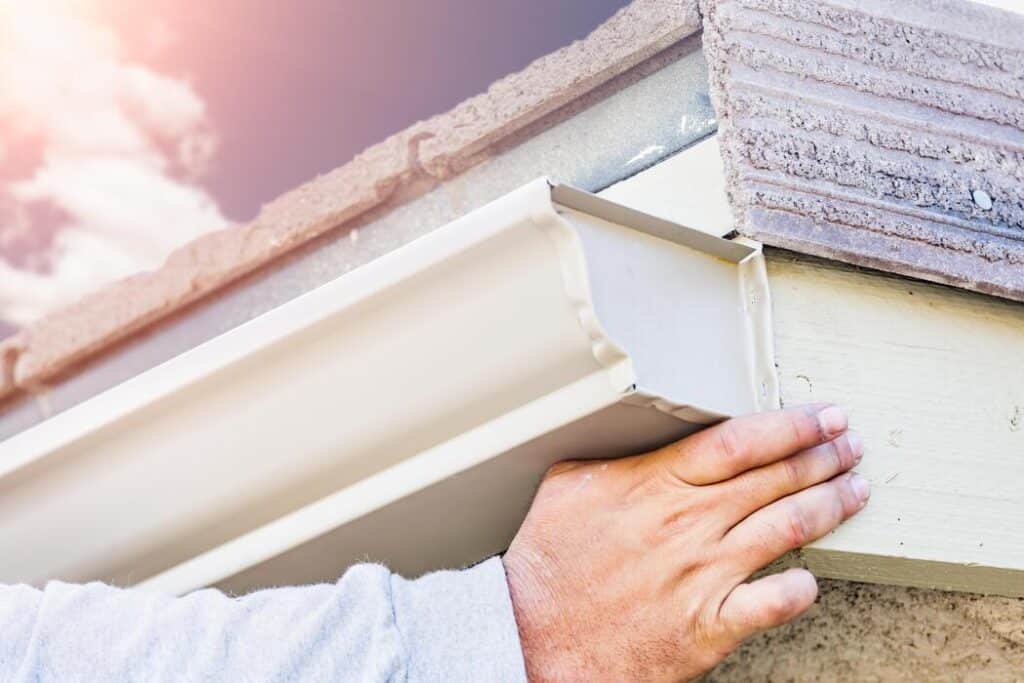
Quick Answer: “Yes, fascia boards can usually be replaced without replacing the gutters. The gutters are temporarily removed or loosened so the damaged wood can be accessed, then reinstalled if they remain structurally sound. New gutters may be recommended when the existing system is bent, rusted, undersized, leaking extensively, or unable to be secured properly.”
Finding rotted fascia behind your gutters does not automatically mean you need to purchase a completely new gutter system. In many cases, the existing gutters can be carefully removed, the damaged fascia replaced, and the same gutters securely reinstalled.
The decision depends on two separate conditions: the extent of the fascia damage and the condition of the gutters. A professional fascia board replacement starts with an inspection of both, along with the roof edge, drip edge, fasteners, and areas where water may have reached the wood.
Why Do Gutters Need to Be Removed During Fascia Replacement?
Gutters usually need to be loosened or temporarily removed because they are attached directly to the fascia board. Contractors need clear access to remove damaged wood, inspect what is behind it, and install the replacement board correctly.
Leaving the gutter in place can prevent access to:
- Rotted areas hidden behind hangers
- Fasteners embedded in weakened wood
- Moisture damage along the roof edge
- The back of the fascia board
- Drip edge and flashing details
- Sections where the gutter has pulled away
Once the fascia has been replaced, the gutter can be reattached to solid material. Reusing the same fastener holes or securing the gutter to damaged wood would leave the system vulnerable to sagging and separation.
The Fascia Replacement Process
The exact process varies with the home, but fascia work around an existing gutter system generally follows several basic steps.
Inspecting the Roofline and Gutter Condition
The contractor first checks how much fascia is damaged and whether the gutter is suitable for reuse.
The inspection may include:
- Looking for soft, swollen, or crumbling wood
- Checking whether damage is isolated or widespread
- Examining gutter seams, corners, and hangers
- Looking for sagging or twisted gutter sections
- Checking for water behind the gutter
- Reviewing the condition of the drip edge and soffit
- Identifying the source of the moisture
The source of the damage matters. Installing new fascia without correcting the leak, overflow, or roof-edge problem may allow the replacement wood to rot again.
Detaching the Existing Gutters
The gutter is carefully loosened or removed from the affected section. Long runs may need extra support during removal to prevent bending or twisting.
Downspouts, elbows, and connected corners may also need to be detached, depending on where the fascia damage is located.
Removing the Damaged Fascia
Rotted or weakened sections are removed so the material behind them can be examined. Hidden damage may extend farther than the staining visible from the ground.
The contractor should confirm that the supporting roof-edge materials are sound enough to receive the replacement board.
Installing the New Fascia Board
New fascia is measured, cut, positioned, and secured along the roofline. The replacement needs to create a straight, stable mounting surface for the gutter.
Any connected drip-edge or moisture-control issue should be addressed before the gutter is reattached.
Reinstalling and Testing the Gutters
Reusable gutters are installed on the new fascia with secure hangers and appropriate alignment. The gutter pitch, corner connections, downspout flow, and roof-edge positioning should be checked before the work is considered complete.
When Can the Existing Gutters Be Reinstalled?
Existing gutters can usually be reinstalled when they remain straight, structurally sound, and capable of draining water correctly.
Good candidates for reuse generally have:
- No widespread rust or corrosion
- No major bending or twisting
- Secure, repairable seams and corners
- Adequate capacity for the roof
- Downspouts that drain properly
- No extensive cracks or holes
- Enough remaining service life to justify reinstalling them
Minor issues do not always require complete replacement. Loose hangers, a small leak, or a slightly misaligned section may be corrected while the gutters are being reinstalled.
Reinstallation can be practical when the fascia problem was caused by one isolated leak or missing roof-edge protection, and the gutter system itself remains in good condition.
Signs the Gutters May Need Replacement Too
Replacing the fascia creates an opportunity to inspect areas of the gutter system that are normally difficult to access. Sometimes that inspection shows that reinstalling the old system would not be a good long-term decision.
New gutters may be more practical when:
- Several sections are sagging or distorted
- The gutter has widespread rust or corrosion
- Seams and corners leak repeatedly
- The system is too small for the roof’s runoff
- Multiple areas have pulled away
- The gutter cannot hold the correct pitch
- Outlets or downspouts are inadequate
- Previous repairs are failing
- The gutters are near the end of their useful life
The presence of one damaged fascia section does not justify new gutters by itself. The recommendation should be based on the gutter system’s actual condition.
Reusing Gutters Versus Replacing Them
The right choice depends on cost, condition, and how reliable the service the existing gutters can still provide.
| Option | Best When | Main Benefit | Main Consideration |
| Reinstall Existing Gutters | Gutters are straight, functional, and in good condition | Avoids paying for a system that is not needed | Removal must be handled carefully to prevent damage |
| Repair and Reinstall | Damage is limited to minor leaks, loose hangers, or alignment issues | Corrects small problems during fascia work | Repairs should provide a reliable long-term result |
| Replace Affected Gutter Sections | Only one run or corner is damaged | Preserves usable sections while correcting local failure | New and existing components must work together |
| Install New Gutters | The existing system is extensively damaged, undersized, or failing | Provides a complete roofline and drainage reset | Higher initial project cost |
A professional inspection should separate necessary work from optional upgrades. Homeowners should understand why a gutter can or cannot be reused before approving replacement.
What Causes Fascia to Rot Behind Gutters?
Fascia usually rots because it remains wet repeatedly. Gutters can hide the early signs, allowing the damage to spread before it becomes visible from the ground.
Common causes include:
- Gutters overflowing onto the fascia
- Leaks at corners, seams, or end caps
- Water running behind the gutter
- Missing or damaged drip edge
- Gutters installed in the wrong position
- Clogged downspouts are causing water to back up
- Peeling paint, exposing bare wood
- Loose gutters trapping moisture
- Roof-edge leaks above the fascia
Fascia replacement should include identifying which of these problems caused the damage. Replacing the wood alone treats the result, not the source.
The warning signs are covered in more detail in Fascia Board Rot: Early Warning Signs Indianapolis Homeowners Should Not Ignore.
Can Only One Section of Fascia Be Replaced?
Yes, a single damaged section can often be replaced without removing all the fascia around the home. Localized replacement is common when the moisture problem is limited to one corner, gutter run, roof valley, or downspout area.
Partial replacement may work when:
- The surrounding wood is dry and firm
- The damage has a clear stopping point
- The new section can be joined securely
- The underlying structure remains sound
- The source of the water has been corrected
More extensive replacement may be needed when rot continues behind several gutter runs or when multiple sections cannot hold fasteners safely.
The visible stain does not always show the full extent of the damage. The final scope may only become clear after the gutter is removed and the wood is exposed.
What Happens If Gutters Are Attached to Rotted Fascia?
Gutters attached to rotted fascia can loosen because their hangers and fasteners no longer have solid wood to grip. The system may start sagging, pulling away, or losing the pitch needed for drainage.
That can create a damaging cycle:
- Fascia softens from repeated moisture.
- Gutter fasteners begin to loosen.
- The gutter shifts away from the roof edge.
- More water runs behind the gutter.
- The fascia remains wet, and the rot spreads.
Simply adding larger screws is rarely a dependable solution when the wood itself has deteriorated. The damaged material needs to be removed so the gutter can be mounted securely.
Drip Edge and Roof-Edge Protection
Drip edge should be checked whenever fascia is replaced because it helps direct roof runoff away from exposed wood and into the gutter.
A missing, bent, short, or incorrectly positioned drip edge may allow water to:
- Travel behind the gutter
- Soak the upper edge of the fascia
- Reach the soffit
- Stain exterior trim
- Continue damaging replacement wood
The gutter and drip edge must also be positioned correctly relative to each other. New fascia will not stay protected if runoff continues to bypass the gutter or cling to the roof edge.
Not every fascia project requires a new drip edge, but the existing roof-edge protection should be inspected before the gutter is reinstalled.
How Long Does Fascia Replacement Take?
The schedule depends on the amount of damage, gutter length, roof height, accessibility, and whether hidden deterioration is discovered.
A small localized replacement may take less time than work involving:
- Several gutter runs
- Multiple corners
- Extensive rot
- Soffit or roof-deck damage
- Gutter repair or replacement
- Drip-edge corrections
- Difficult access to a multi-story home
The contractor should avoid promising an exact completion time before inspecting the exposed area. Rot can extend behind the gutter farther than expected.
Questions to Ask Before Approving the Work
Clear questions help homeowners understand which parts of the project are necessary.
Ask the contractor:
- How much fascia appears damaged?
- Will the gutters be removed or only loosened?
- Are my current gutters suitable for reuse?
- What caused the fascia to rot?
- Will that source be corrected during the work?
- Is the drip edge present and positioned correctly?
- Are the soffit or roof-deck materials affected?
- Will the gutter pitch be checked after reinstallation?
- Which repairs are required and which are optional?
The answers should explain the relationship between the fascia, gutter, drip edge, and water path rather than treating each part as a separate issue.
Fascia Replacement in Central Indiana
Homes in Indianapolis, Carmel, Fishers, Noblesville, Westfield, and nearby communities face heavy rain, snow, seasonal debris, and repeated freezing and thawing.
These conditions can expose weak points along the roofline. Overflowing gutters may soak fascia during storms, while water behind the gutter can freeze around gaps during colder weather. Damage may become most visible when gutter sections begin pulling away or when fascia paint starts peeling.
Central Indiana homeowners should have the connected system inspected when they notice:
- Soft or darkened fascia
- Gutters are pulling away repeatedly
- Water behind the gutter line
- Persistent corner leaks
- Peeling roofline paint
- Sagging after rain or snow
- Moisture near soffits
Early attention may allow a smaller section of fascia to be replaced before the damage spreads.
Common Questions About Replacing Fascia Behind Gutters
Do all the gutters need to come off for fascia replacement?
Only the gutters attached to the affected fascia usually need to be removed or loosened. The exact amount depends on the location and length of the damaged wood.
Can the same gutters be reinstalled afterward?
Yes. Gutters can often be reinstalled when they remain straight, structurally sound, properly sized, and free from extensive corrosion or damage.
Will removing the gutters damage them?
Careful removal should limit damage, but older, brittle, bent, or heavily sealed sections may not come apart cleanly. Their condition should be assessed before work begins.
Should the drip edge be installed when the fascia is replaced?
The drip edge should be inspected during fascia replacement. Installation or correction may be recommended when it is missing, damaged, or allows water to reach the fascia.
Is replacing rotted fascia enough to stop the problem?
No. The source of the moisture must also be corrected. Overflow, leaking seams, missing drip edge, roof-edge gaps, or poor gutter positioning can damage the new fascia if left unresolved.
Restore Solid Support Without Replacing What Still Works
Fascia boards can usually be replaced without buying an entirely new gutter system. The existing gutters may be removed temporarily and reinstalled when they remain functional and structurally sound.
The most important step is correcting both the damaged wood and the condition that caused it. Auravex can inspect the fascia, gutters, drip edge, and connected water path, then explain which components can be reused and which work is necessary.
To schedule an assessment, contact Auravex Gutters.

